


Tapestry conservation continues at the Heritage Skills Centre
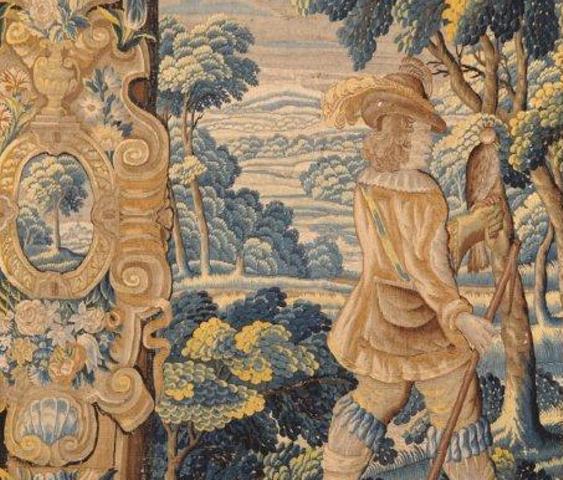
The Heritage Skills Centre, at Lincoln Castle, is currently home to a conservation project aimed at staving off further decay of the tapestries from Doddington Hall.
Over the years the tapestries have inevitably become damaged and worn, and here the conservators explain some of the textile problems they are dealing with.
“When the tapestries were hung in the Holly Bedroom at Doddington Hall in 1762 they were already over 100 years old, repairs were made to them by a local tailor. Holes were darned, opening slits were closed and patches were stitched over large holes. In some places these repairs have caused added tension to the tapestries where they have pulled together too tightly.
Sets of tapestries were often made for a room, equalling the width and height of the room they were commissioned for. These tapestries however were either second hand or had come from another part of Doddington Hall…..they therefore did not fit the room. They were cut around the doors and the fireplace, overlapped, patched and nailed to the walls on all sides and into the corners of the room.
Holes in the tapestries are found when warp threads have broken or when the weft threads have been worn away or have become so brittle they have been lost, leaving behind bare exposed warp threads. Often a hole is a combination of both broken warps and lost weft. The causes of these holes are varied. Many of the broken warps have been caused by the 1600 plus nails that were used to attach the tapestries to the walls in 1762 and also where cuts have been made for fixtures and fittings, such as door knobs and light switches.
Insects have also caused some damage to both the warps and weft, particularly moths and carpet beetle larvae. In some places you can see where a moth has travelled across the tapestry like a little lawn mower, trimming the weft right down to the warps.
Other places where we have found a particularly large amount of weft fibre loss are in the dark brown wool areas. This is likely due to the way this colour was dyed, using Iron as a mordent to fix the dye, leading to an increased rate of decay than the other colours.”
← Back